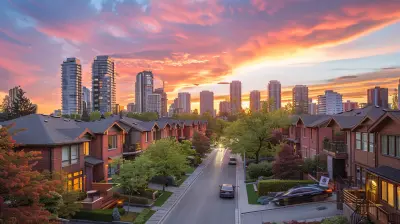
What to Expect From Home Price Growth in Emerging Cities by 2027
26 April 2026
Let’s be honest—if you’ve been watching the real estate market lately, you’ve probably felt like you’re trying to read a map in a language you don’t quite speak. One day, prices are skyrocketing in the suburbs; the next, everyone’s talking about “secondary cities” and “emerging markets” as if they’re the new gold rush. It’s enough to make your head spin. But here’s the thing: the real action isn’t in the big, crowded metros anymore. It’s happening in the cities you might not have on your radar yet—places where home price growth is quietly, steadily, and sometimes dramatically reshaping the landscape.
So, what can you actually expect from home price growth in these emerging cities by 2027? Grab a coffee, get comfortable, and let’s break it down together. I’ll walk you through the trends, the numbers, and the human stories behind them—no jargon, no fluff, just the real talk you need.

Why Emerging Cities Are Stealing the Spotlight
Think of major metros like New York, San Francisco, or London as the aging rock stars of the real estate world. They’ve had their glory days—record-breaking tours, massive crowds, and sky-high prices. But now? They’re starting to slow down, worn out by their own success. Meanwhile, emerging cities are like the opening acts that suddenly go viral. Places like Boise, Idaho; Spokane, Washington; or even mid-sized hubs in the Sun Belt and Midwest are drawing crowds because they offer something the big cities can’t: breathing room.Why is this happening? It’s not just about remote work, though that’s a huge piece of the puzzle. It’s about a fundamental shift in what people value. After the pandemic, we started asking ourselves: Do I really need to pay $3,000 a month for a shoebox with a view of a brick wall? The answer, for millions of people, was a resounding no. Instead, they packed up their laptops and headed for cities where a dollar goes further, where you can actually afford a backyard, and where the commute is measured in minutes, not hours.
By 2027, this trend won’t just continue—it’ll accelerate. Home prices in emerging cities are expected to grow at a faster clip than their established counterparts, but not in a straight line. There will be peaks, plateaus, and maybe a few bumps along the way. Let’s dig into the specifics.
The Economic Engine Driving Price Growth
Here’s a simple truth: home prices follow jobs. It’s like a dance—if the music (the economy) is good, people show up, and prices rise. Emerging cities are seeing a massive influx of employers planting flags. Tech companies, logistics hubs, and manufacturing plants are moving to places like Austin, Texas; Raleigh, North Carolina; and even smaller gems like Chattanooga, Tennessee. Why? Because these cities offer lower operational costs, tax incentives, and a workforce that’s hungry for opportunity.Take a city like Boise, for example. A few years ago, it was a sleepy capital known for potatoes and mountain views. Today, it’s a tech-adjacent hub with a growing population of remote workers and startups. By 2027, experts predict Boise’s home prices could see annual growth of 5% to 8%—not the double-digit spikes of the pandemic mania, but steady, sustainable gains. That’s the sweet spot for buyers and investors alike.
But here’s the kicker: not all emerging cities are created equal. Some will boom, others will bust, and a few will just… bob along. The key is to look at the fundamentals—job diversity, population growth, and infrastructure investments. If a city has all three, you can bet your bottom dollar that home prices will follow.
The Remote Work Ripple Effect
Remember when working from home was a temporary thing? Yeah, that didn’t last. Remote work is here to stay, and it’s reshaping real estate in ways we’re only beginning to understand. For emerging cities, this is a double-edged sword.On one hand, remote workers bring money. They’re often high-earning professionals who can afford to pay a premium for space and amenities. They’re buying homes, renovating kitchens, and spending at local coffee shops. This influx of cash can push prices up quickly. On the other hand, it can create affordability crises for locals. If a teacher in Boise suddenly can’t afford a home because a tech worker from San Francisco offered $100,000 over asking, that’s a problem.
By 2027, I expect this tension to play out in fascinating ways. Some emerging cities will implement policies to protect local buyers—think down payment assistance programs or zoning changes. Others will let the market rip, leading to price growth that feels both exhilarating and terrifying. The question is: Where do you want to be on that spectrum?
Infrastructure: The Invisible Hand of Price Growth
You can’t talk about home prices without talking about roads, trains, and internet cables. Infrastructure is the skeleton of a city’s growth. When a new highway, light rail, or high-speed fiber network goes in, prices follow like shadows.Take Spokane, Washington. For years, it was the overlooked cousin of Seattle—cheaper, quieter, and a bit rough around the edges. But then, major investments in the city’s downtown revitalization, plus a new terminal at the airport, started turning heads. By 2027, Spokane’s home prices are projected to grow by 6% to 10% annually, driven largely by improved connectivity and a growing tech sector.
Similarly, cities like Huntsville, Alabama, are riding a wave of federal and private investment in aerospace and defense. When the government spends billions on a new rocket program, you can bet that housing prices will launch alongside it. See what I did there? It’s not rocket science—it’s just good old-fashioned supply and demand.
The Supply Crunch: Why Prices Won’t Crash
Let’s address the elephant in the room: Are we heading for a housing crash? Short answer: probably not in emerging cities. Here’s why.For starters, supply is still woefully behind demand. In many emerging cities, builders simply can’t keep up. Labor shortages, rising material costs, and zoning restrictions are creating a perfect storm of limited inventory. Even if demand cools slightly—say, due to higher interest rates—prices are unlikely to plummet because there just aren’t enough homes to go around.
Think of it like a party where everyone wants to get in, but the venue only has so many seats. The bouncer (the market) can raise the cover charge (prices) as much as he wants, and people will still pay because the alternative is standing outside in the cold. By 2027, this dynamic will be even more pronounced in emerging cities, where population growth is outpacing new construction by a wide margin.
Of course, there are exceptions. Cities that overbuild or rely on a single industry (think oil towns in Texas) could see price corrections. But for the most part, the trajectory is upward—just not in a straight line.
The Human Factor: Who’s Moving and Why
Behind every price statistic is a person—a family, a retiree, a young professional—making a life-changing decision. Understanding who’s moving to emerging cities helps us predict where prices will go next.Millennials are the biggest demographic driving this shift. They’re in their peak home-buying years, and they’re tired of renting. Many are looking for affordability, good schools, and a sense of community. Emerging cities offer all three. Gen Z is also starting to enter the market, and they’re even more open to living in non-traditional hubs. By 2027, we’ll see a wave of first-time buyers in places like Greenville, South Carolina, and Reno, Nevada.
Retirees are another key group. They’re selling high in expensive coastal cities and buying low in places like Florida’s Panhandle or Arizona’s smaller towns. This “silver tsunami” is pushing up prices in retirement-friendly emerging cities, especially those with good healthcare and mild winters.
And let’s not forget the international angle. With remote work, you don’t even need to be in the same country. Some emerging cities are attracting global buyers looking for second homes or investment properties. This adds another layer of demand, especially in cities near borders or with strong cultural appeal.
Interest Rates: The Wild Card
If there’s one thing that keeps real estate pros up at night, it’s interest rates. They’re like the weather—you can’t control them, but you have to plan around them. Over the past couple of years, rates have jumped from historic lows to levels we haven’t seen in decades. That’s scared some buyers away and slowed price growth in many markets.But here’s the thing: emerging cities are more resilient to rate hikes than their expensive counterparts. Why? Because the price points are lower. A 7% mortgage on a $300,000 home is a lot more manageable than a 7% mortgage on a $1.2 million home. So while rising rates might cool the market temporarily, they won’t stop the long-term trend of growth in emerging cities.
By 2027, if rates stabilize or even drop slightly—as many economists predict—we could see a second wave of demand. Buyers who sat on the sidelines will rush back in, and prices will climb again. It’s a cycle, but one that favors the patient and the prepared.
The Climate Factor: A New Layer of Risk
Let’s talk about something that’s often ignored in real estate conversations: climate change. Emerging cities aren’t immune to its effects. In fact, some are on the front lines.Cities in the Sun Belt, like Phoenix or Las Vegas, face water scarcity and extreme heat. Others in the Southeast, like Charleston, deal with hurricane risks and rising sea levels. These factors can depress long-term price growth or even lead to sudden drops after a disaster.
On the flip side, climate-resilient emerging cities are gaining a premium. Places in the Great Lakes region—think Buffalo, New York, or Duluth, Minnesota—are being touted as “climate havens.” They have access to fresh water, milder weather, and lower natural disaster risks. By 2027, I expect these cities to see above-average price growth as climate-conscious buyers shift their priorities.
It’s a sobering thought, but it’s also an opportunity. If you’re investing in an emerging city, do your homework on climate risks. A cheap house in a flood zone isn’t a bargain—it’s a liability.
What to Expect by 2027: A Practical Outlook
Alright, let’s get down to brass tacks. Here’s my best guess at what home price growth will look like in emerging cities by 2027, based on current trends and a healthy dose of realism.- Average Annual Growth: Expect 4% to 8% per year in most emerging cities. That’s slower than the pandemic frenzy but healthier than the stagnant growth in some major metros.
- Top Performers: Cities with strong job growth, good infrastructure, and affordable inventory—like Boise, Huntsville, and Greenville—could see 8% to 12% growth in certain years.
- Laggards: Overhyped cities that lack economic diversity or face climate risks might only see 2% to 4% growth. Some could even dip.
- The Big Wildcard: A recession, a tech bubble burst, or a major climate event could throw everything off. But barring that, the trend is your friend.
Remember, this isn’t a crystal ball—it’s a compass. Use it to navigate, but trust your own judgment.
How to Prepare (Without Losing Your Mind)
So, what should you do with all this information? Whether you’re a first-time buyer, an investor, or just a curious observer, here are a few practical tips:1. Do your research, not just your scrolling. Look at job reports, population data, and new construction permits. Numbers don’t lie, but headlines often do.
2. Don’t try to time the market. You’ll drive yourself crazy. Instead, focus on a city’s long-term fundamentals. If they’re solid, buy when you can afford to.
3. Consider renting first. If you’re moving to an emerging city, rent for a year to get a feel for the neighborhoods. You’ll avoid buyer’s remorse and learn the lay of the land.
4. Work with a local agent. They know the quirks of the market—which streets flood, which schools are best, and where the new coffee shop is opening. Their insight is worth every penny.
5. Be patient but act when it counts. Prices won’t skyrocket overnight in most emerging cities, but good deals don’t last. When you find a home that fits, don’t overthink it.
The Bottom Line: Hope, Hype, and Reality
Emerging cities are more than just a trend—they’re a reflection of how we live, work, and dream. By 2027, home prices in these places will likely be higher, but not out of reach for the savvy and the determined. The key is to separate the hype from the reality.Will you get rich overnight? Probably not. Will you find a place where your money goes further and your quality of life improves? Absolutely. And isn’t that the whole point?
So, take a deep breath. The market is always moving, but it’s not a race. It’s a marathon with a few sprints along the way. Whether you’re buying a home or just watching from the sidelines, remember: the best investment you can make is in a place that feels like home. And in these emerging cities, that feeling is growing faster than ever.
all images in this post were generated using AI tools
Category:
Rising Home PricesAuthor:

Travis Lozano
Discussion
rate this article
2 comments
Lillian McHugh
This article offers valuable insights into the future of home prices in emerging cities. It's exciting to see how these areas are evolving, and the potential for growth is inspiring. Thank you for sharing such important information.
June 10, 2026 at 3:32 AM
Travis Lozano
Thank you for your kind words! I'm glad you found the insights valuable. Exciting times ahead for these cities!
Mackenzie McClure
Great insights! Emerging cities hold incredible potential for growth. Investing now could lead to significant rewards. Excited to see how these markets evolve by 2027!
April 28, 2026 at 4:55 AM
Travis Lozano
Thanks for your thoughts! I agree that the potential in emerging cities is vast. It'll be interesting to track their progress over the next few years.