Urban vs Suburban: Price Growth Outlook Through 2027
13 October 2026
The question of where home prices will grow faster, in cities or in their surrounding suburbs, has rarely been harder to answer. For decades, the pattern looked almost mechanical. Urban cores led during expansions, suburbs caught up during recoveries, and the gap between the two stayed roughly predictable. That rhythm broke somewhere around 2020, and it has not fully reestablished itself since. Anyone projecting price growth through 2027 has to reckon with a housing market shaped by remote work, constrained supply, shifting migration patterns, and interest rates that behave nothing like the ones buyers grew accustomed to after 2009.
This article is not a forecast that pretends to certainty. It is a framework for thinking about where price growth is likely to concentrate, why, and what could invalidate that view. The distinctions between urban and suburban markets matter less than most people assume, and the distinctions within each category matter far more. A condo tower in a downtown that emptied out in 2021 and a walkable neighborhood near a research university are both "urban," but they may as well be in different countries when it comes to price trajectory.
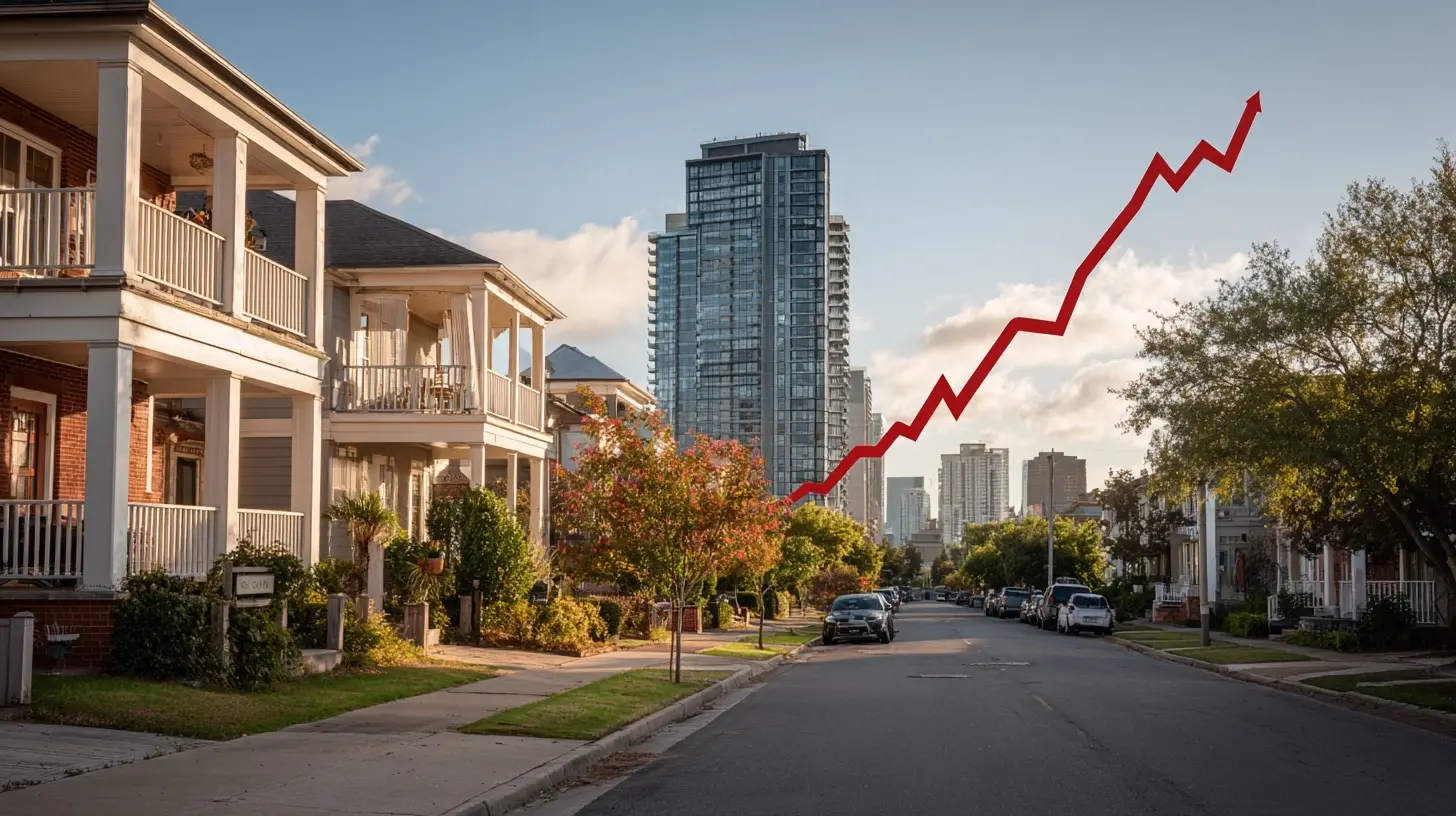
Why the Old Urban Versus Suburban Playbook No Longer Works
The traditional model assumed a few stable relationships. Jobs clustered downtown. Commuting costs were high enough to make proximity valuable. Suburbs offered more space per dollar, so families traded location for square footage. Investors bought urban condos for rental yield and suburbs for appreciation.Each of those assumptions has weakened. Remote and hybrid work decoupled many jobs from downtown addresses. Commuting costs, in both time and money, became less binding for a large share of white-collar workers. Meanwhile, suburban areas themselves diversified. Many now have their own employment centers, walkable town cores, and transit access that rivals what older suburbs offered.
The result is that "urban" and "suburban" have become less useful as categories than as spectra. A neighborhood's price outlook through 2027 depends less on whether it sits inside a city limit and more on four underlying forces: supply elasticity, income composition, amenity depth, and the direction of migration flows. Where those forces align, prices tend to rise. Where they conflict, prices stall or fall regardless of the urban or suburban label.
The Forces That Will Actually Drive Prices Through 2027
Supply, Not Demand, Will Set the Ceiling
In most of the country, the binding constraint on price growth is not how many people want to live somewhere. It is how many homes can be built there. Markets with rigid supply, meaning places where zoning, geography, or construction costs make new housing difficult, tend to see prices rise faster when demand increases. Markets with elastic supply absorb demand through new construction and see more modest price growth.This is why coastal urban cores and mature inner-ring suburbs often outperform fast-growing Sun Belt suburbs on a percentage basis, even when the latter add far more people. The Sun Belt builds. The coasts and older metros mostly do not. Through 2027, this dynamic is likely to persist, and it argues for paying close attention to the regulatory and physical constraints of any market before assuming growth.
The Interest Rate Variable
Higher mortgage rates changed the calculus for both buyers and sellers. Existing homeowners with low-rate mortgages have little incentive to move, which suppresses inventory. That scarcity supports prices in desirable areas. At the same time, high rates reduce purchasing power, which caps how much buyers can pay.The net effect varies by price tier. Entry-level and mid-market homes face the most pressure from affordability limits. Luxury markets, where buyers are less rate-sensitive or pay in cash, can be more resilient. Through 2027, if rates decline modestly, the release of pent-up demand could lift prices broadly, but the effect will be uneven. Markets that already stretched affordability to its limit may see slower growth than markets where incomes comfortably support current prices.
Migration Patterns Are Reshuffling the Map
Domestic migration since 2020 has favored suburbs, smaller metros, and regions with lower costs of living. Some of that was a pandemic shock that has partially reversed. Some reflects durable preferences for space and lower density. The honest answer is that the two are hard to separate, and anyone claiming to know the exact split is guessing.What matters for price growth is whether in-migration is met with new construction. Austin and Boise both saw surges in demand. Austin built aggressively and its price growth cooled. Boise, more constrained, saw sharper swings. The lesson is not that migration drives prices. It is that migration drives prices only where supply cannot respond.

Urban Price Growth: Where It Holds and Where It Falters
Urban markets are not monolithic. Through 2027, expect sharp divergence within cities themselves.The Resilient Urban Tier
Neighborhoods with deep amenities, strong transit, proximity to major employers, and limited buildable land tend to hold value well. Think of established districts in Boston, Seattle, or the Bay Area. These areas share a common trait: they cannot easily add housing, and the people who want to live there are not easily deterred by cost.Price growth in these markets is likely to be steady rather than spectacular. They are already expensive, which limits percentage gains, but their supply constraints provide a floor. The main risk is a sustained exodus of high-income residents, which has not materialized at scale in most of these markets.
The Vulnerable Urban Tier
Downtown cores that depend heavily on office workers, commuters, and investors of small condos face a harder road. If office occupancy remains below pre-2020 levels, the businesses that served those workers lose revenue, and the neighborhood's amenity base erodes. Condo prices in these areas can stagnate or decline even while the broader metro appreciates.This is where the urban versus suburban framing breaks down most visibly. A downtown condo and a suburban single-family home in the same metro may show opposite price trends for years, because they serve different buyers with different needs.
What to Watch in Urban Markets
Three signals matter most. First, office conversion activity. Cities that successfully convert underused commercial space to housing reduce their inventory overhang and stabilize neighborhoods. Second, transit investment. New or improved transit lines tend to lift prices near stations over time. Third, crime and public safety trends, which affect demand more than most analysts publicly admit.
Suburban Price Growth: The New Default, With Caveats
Suburbs have absorbed much of the demand shift since 2020, but not all suburbs are equal. The ones most likely to outperform through 2027 share specific characteristics.The Advantage of Scarcity in Mature Suburbs
Older, close-in suburbs with established trees, good schools, and limited undeveloped land behave much like constrained urban neighborhoods. They cannot easily add housing, and demand remains strong. These markets often see steady appreciation with relatively low volatility.The Risk in Exurban and New-Build Suburbs
Farther-out suburbs and exurbs that expanded rapidly during the pandemic face a different outlook. They added supply quickly, which caps price growth. If commuting becomes more important again, or if gas prices and commute times weigh on buyers, demand could soften. These markets are not doomed, but they are more vulnerable to oversupply and to shifts in buyer preference.Schools, Taxes, and the Fine Print
Two factors that receive less attention than they deserve are school district boundaries and property tax structures. A suburb with strong schools and moderate taxes can sustain price growth even in a soft market. A suburb with weak schools or high taxes relative to services may struggle, especially if it also has room to build. Buyers should look at these fundamentals before assuming a suburban address guarantees appreciation.A Side-by-Side Framework for Evaluating Any Market
Rather than asking whether urban or suburban will win, ask these questions about any specific location:1. How easily can new housing be built here? The harder it is, the more likely prices rise when demand does.
2. Who is moving in, and who is moving out? Net inflow of higher-income households supports prices. Net outflow does not.
3. What anchors the local economy? A diversified employment base is more resilient than one dependent on a single industry or a single office district.
4. How deep are the amenities? Walkability, transit, parks, restaurants, and cultural institutions all support demand.
5. What is the affordability ceiling? Markets where median prices already exceed what local incomes can support are vulnerable to stagnation.
These questions apply equally to a downtown loft and a suburban cul-de-sac. The answers, not the label, determine the outlook.
Common Mistakes and Misconceptions
A few errors show up repeatedly in discussions of urban and suburban price growth.Mistake one: treating metros as single markets. A metro area can contain dozens of submarkets moving in different directions. Averaging them hides the signal.
Mistake two: assuming past growth predicts future growth. Markets that ran hottest often correct hardest. The best predictor is not recent appreciation but underlying supply and demand conditions.
Mistake three: ignoring the cost of carrying a home. Price growth means little if taxes, insurance, maintenance, and financing costs consume the gains. In some markets, especially those exposed to climate risk, insurance costs have risen sharply and can offset appreciation.
Mistake four: confusing population growth with price growth. Places can add people rapidly while prices stay flat, if construction keeps pace. Places can lose population while prices rise, if supply is constrained and remaining residents are wealthier.
Misconception: remote work killed cities. It did not. It redistributed demand within and between metros. Some urban neighborhoods thrived. Others struggled. The same is true of suburbs.
Practical Advice for Buyers, Sellers, and Investors
If You Are Buying a Home to Live In
Prioritize the fundamentals you cannot change: location relative to your work, school quality, neighborhood stability, and the cost of carrying the home. Price growth is a bonus, not a plan. A home that suits your life for a decade will likely appreciate reasonably in most markets, and if it does not, you still had a decade of use.If You Are Selling
Timing matters less than condition, pricing, and presentation. In markets with constrained supply, well-prepared homes still attract competition. In markets with ample supply, overpricing is punished quickly. Know which market you are in before you list.If You Are Investing
Focus on supply constraints and income trends. Markets where high earners are moving in and new construction is difficult tend to outperform. Be skeptical of markets where prices have risen fast on the back of easy credit or speculative demand. Run the numbers with realistic vacancy, maintenance, and insurance assumptions. If the deal only works with aggressive appreciation, it does not work.
What Could Change the Outlook
Forecasts are conditional. Several developments could shift the trajectory described here.A sharper-than-expected drop in interest rates could unleash demand and lift prices broadly, with the strongest effects in rate-sensitive entry-level segments. A recession that raises unemployment would hit demand and could push prices down in leveraged markets. Changes to zoning or tax policy could alter supply conditions in ways that take years to play out. Climate-driven insurance withdrawals could reshape demand in exposed regions faster than most models assume.
None of these are predictions. They are scenarios worth monitoring, because each would change which markets lead and which lag.
The Bottom Line Through 2027
The urban versus suburban question is the wrong frame. The right frame is constrained versus unconstrained, diversified versus dependent, and affordable versus stretched. Markets that score well on supply constraint, income diversity, and amenity depth are likely to see the most durable price growth, whether they sit inside a city limit or twenty miles beyond it.Investors and buyers who understand this will make better decisions than those who chase headlines about the death of cities or the triumph of suburbs. Both stories are partly true and mostly incomplete. The specific block, the specific school district, and the specific supply pipeline will matter far more than the label on the map.
all images in this post were generated using AI tools
Category:
Rising Home PricesAuthor:

Travis Lozano