Remote Work and the Demand for Rural Living in 2026
11 September 2026
For decades, the relationship between where people live and where they work was simple. You found a job, and then you found a home within a reasonable commute of that job. Cities and suburbs grew because that was where the offices were. Rural areas lost population because the opportunities were elsewhere. That logic held for a very long time, and it shaped everything from housing prices to school funding to highway construction.
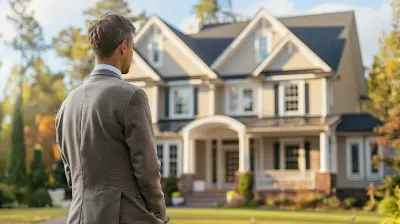
Then remote work arrived at scale, and the logic cracked. Not overnight, and not everywhere, but enough that by 2026 the map of American housing demand looks noticeably different than it did in 2019. Rural counties that spent years watching their populations shrink are now fielding multiple offers on properties that once sat on the market for a year. Small towns are debating how to handle growth they never expected. And buyers who dreamed of a quieter life are confronting the practical realities of that dream in ways they did not anticipate.
This is not a simple story about everyone fleeing cities. It is a more complicated story about who is moving, why, where they are going, and what happens when they get there. Understanding it matters whether you are buying, selling, investing, or simply trying to make sense of a housing market that no longer follows the old rules.
The Shift That Started Before Anyone Noticed
The pandemic gets credit for launching remote work, but the groundwork was laid earlier. Cloud computing, video conferencing, and collaborative software had been improving for years. What the pandemic did was force a massive, involuntary experiment. Millions of people who assumed their jobs could never be done remotely found out that they could, at least partially.By 2026, that experiment has settled into something more stable. Most knowledge workers are not fully remote. Many are hybrid, splitting time between home and an office. But a meaningful share are fully remote, and an even larger share have enough flexibility that their physical location is no longer tied to a specific building in a specific city.
This flexibility is the key variable. It does not matter that everyone can work from anywhere. It matters that enough people can that the housing market responds. When even 15 or 20 percent of a metro area's workforce can choose where to live, that choice ripples through prices, construction, and migration patterns.
Why Location Still Matters, Just Differently
Here is a common misconception: remote work means location does not matter. That is wrong. Location matters more than ever, but the criteria have changed.When your job is in a downtown office, your housing decision is dominated by commute time. You trade space for proximity. You accept a smaller home, a longer walk to a park, or higher noise levels because being close to work is worth it.
When your job is remote, commute time drops to zero for most days. That frees up a whole set of priorities. Suddenly, things like natural light, a spare room for an office, outdoor space, and a lower cost of living move to the top of the list. Proximity to a major employment center becomes irrelevant, or nearly so.
But other location factors become more important. Internet reliability moves from a nice-to-have to a dealbreaker. Access to healthcare, groceries, and reliable utilities matters more when you are home all day. And social infrastructure, the coffee shops, community groups, and casual gathering places that used to be provided by an office, has to be found elsewhere.
What Rural Actually Means in 2026
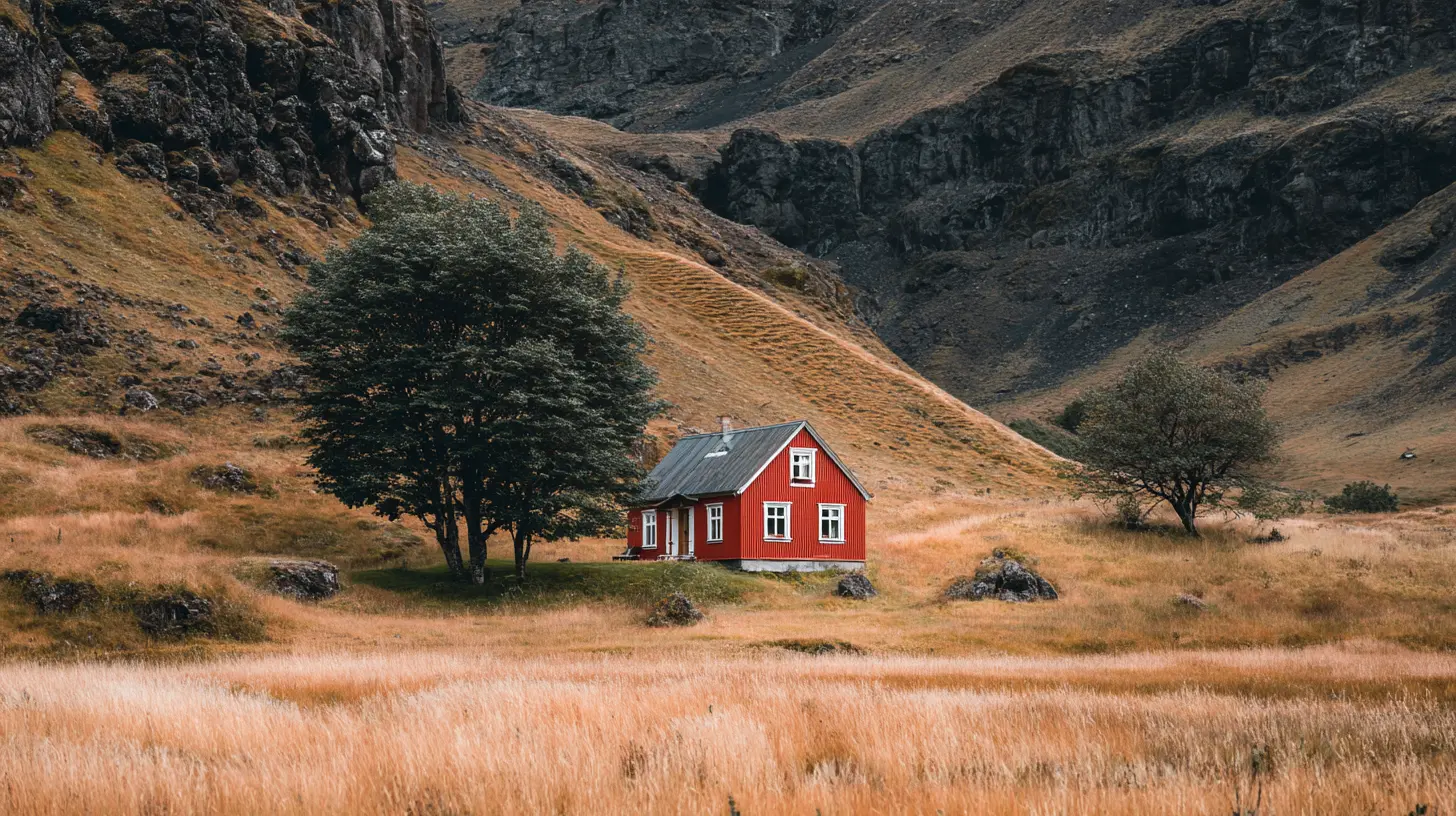
Before going further, it is worth being precise about terms. "Rural" gets used loosely, and that looseness causes confusion.In housing conversations, rural usually means one of three things. First, true rural: low population density, agricultural or natural land, limited services, often 30 minutes or more from a hospital or large grocery store. Second, exurban or fringe rural: areas just beyond the suburbs, still within reach of a mid-sized city, with some services but a distinctly non-urban feel. Third, small-town rural: incorporated towns of a few thousand people, often county seats, with a main street, a school, and a basic commercial core.
These three categories behave very differently in the housing market. Buyers who say they want rural living often mean the third, sometimes the second, and rarely the first. Understanding which one you actually want is the single most important step before you start looking.
The Three Buyers Driving Demand
Demand for rural housing in 2026 comes from three distinct groups, and they have different needs and different price sensitivities.The first group is remote knowledge workers, typically in their 30s and 40s, often with young children. They are leaving expensive metro areas, selling or renting out city homes, and buying larger properties in small towns or exurbs. They want good internet, decent schools, and a reasonable drive to a regional airport or a mid-sized city for occasional in-person meetings.
The second group is early retirees and near-retirees. They are not bound by jobs at all. They are looking for lower taxes, milder seasons, or proximity to family. They often prioritize healthcare access and single-story living over acreage.
The third group is local buyers who were already in these markets. They are the ones most affected by the arrival of the first two groups, because prices rise and inventory shrinks. A teacher or nurse who grew up in a small town may find that the house their parents could afford is now out of reach.
Any honest discussion of rural demand has to acknowledge that these three groups are not always aligned. What is good for the incoming remote worker may be bad for the local buyer. That tension shapes local politics, zoning decisions, and community attitudes.
The Economics of Rural Living
The financial case for rural living is straightforward on the surface. Housing costs less. Taxes are often lower. You get more space for the same money.But the full picture is more nuanced. Rural living comes with costs that urban and suburban buyers often underestimate.
What You Save
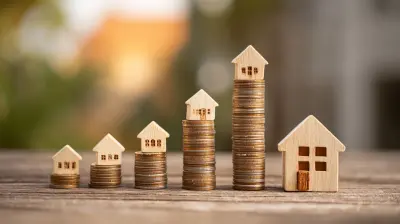
The most obvious saving is on housing. A budget that buys a two-bedroom condo in a major metro can buy a four-bedroom house on several acres in many rural markets. That gap is real and it is the primary driver of migration.Property taxes are often lower in rural counties, though this varies widely by state and by how local services are funded. Some rural areas have higher effective tax rates because the tax base is small and the costs of roads, schools, and emergency services are spread across fewer residents.
You may also save on commuting costs, parking, and the general friction of urban life. If you previously paid for parking, tolls, or a transit pass, those expenses disappear.
What You Spend
The savings are real, but so are the new costs. Rural homeowners frequently spend more on:- Internet. Reliable high-speed internet may require satellite, fixed wireless, or a costly fiber installation. In some areas, the only option is expensive and slow.
- Utilities. Well water and septic systems require maintenance. Propane or heating oil can be more expensive than natural gas.
- Transportation. Distances are longer. You may need a second vehicle, and you will spend more on fuel and maintenance.
- Home maintenance. More land means more equipment, more time, and more expense. A tractor, a riding mower, and a chainsaw are not luxuries on a few acres.
- Travel. Visiting family, attending conferences, or taking vacations often requires a longer drive to an airport and sometimes an overnight stay before an early flight.
The net financial benefit of rural living depends heavily on how you weigh these factors. For some households, the savings are substantial. For others, the hidden costs eat most of the difference.
The Internet Question
If there is one issue that dominates rural remote work conversations, it is internet access. It is also the issue most often mishandled by buyers.The mistake is relying on advertised coverage maps. These maps are frequently inaccurate. They show service at a census block level, which means a neighbor may have excellent service while your specific address has none.
The correct approach is to verify service at the exact address before making an offer. Call the providers, ask for a service qualification at that address, and get it in writing if possible. If the previous owner had service, ask what speed they actually received, not what was advertised. Ask whether the connection was reliable during peak hours.
Options When Wired Service Is Not Available
If fiber or cable is not available, you have several alternatives, each with trade-offs.Fixed wireless uses a receiver on your roof to connect to a tower. It can be fast and reasonably priced, but it depends on line of sight and can degrade in bad weather.
Satellite is available almost everywhere but historically suffered from high latency and data caps. Newer low-earth-orbit satellite services have improved this significantly, though they remain more expensive than wired options and can be affected by obstructions like trees.
Mobile hotspot or 5G home internet can work well in areas with strong cellular coverage. It is easy to set up and often affordable, but performance varies with network congestion and signal strength.
Building your own connection is rarely practical, but in some cases a group of neighbors can pool resources to extend service. This is uncommon but not unheard of.
For anyone whose income depends on reliable video calls or large file transfers, internet should be treated as a non-negotiable utility, not an afterthought.
Schools, Healthcare, and the Services Question
Two other factors consistently surprise remote workers who move to rural areas: schools and healthcare.Schools
Rural schools can be excellent. Small class sizes, strong community involvement, and dedicated teachers are common. But they can also be under-resourced, with limited course offerings, fewer extracurriculars, and long bus rides.If you have children, visit the schools before you buy. Talk to parents. Ask about class sizes, teacher turnover, and what happens for students who need advanced coursework or special education services. Do not assume that a small school is automatically better or worse. It depends on the specific school and the specific child.
Healthcare
Healthcare access is the more serious issue for many rural buyers. Rural areas have fewer primary care physicians, longer waits for specialists, and in some cases no hospital within an hour's drive.For younger, healthy households, this may be manageable. For anyone with chronic conditions, aging parents, or young children, it deserves careful thought. Telehealth has expanded access to some services, but it cannot replace emergency care or hands-on procedures.
Before moving, identify the nearest hospital, the nearest urgent care, and the nearest specialist for any condition you or your family manage. Check whether those providers accept your insurance. This is not a hypothetical exercise. It is the kind of planning that prevents a difficult situation from becoming a crisis.
The Community Dimension
Rural living offers something that is hard to quantify and hard to replace: a sense of community. But that sense of community does not automatically include newcomers.In many small towns, social life revolves around institutions that take time to enter: churches, volunteer fire departments, youth sports, local clubs. Newcomers who work remotely may find that their workday ends and there is no built-in social outlet.
This is a real challenge, and it is one that remote workers often underestimate. The office, for all its flaws, provides casual social contact. Remove it and you have to build those connections deliberately.
The remote workers who thrive in rural areas tend to be the ones who engage. They join the volunteer fire department. They coach a youth team. They show up at town meetings. They patronize local businesses and get to know the owners. They do not treat the town as a dormitory.
Common Mistakes Buyers Make
After watching this migration play out for several years, patterns have emerged. Certain mistakes show up again and again.Buying on a visit. A weekend in the country in good weather is not the same as living there year-round. Visit in different seasons. Drive the roads in winter. See what the town looks like on a Tuesday in February.
Underestimating the work. Acreage and older homes require maintenance. If you are not prepared to spend weekends on repairs, landscaping, and equipment upkeep, consider a smaller property or a newer home.
Ignoring the resale question. Rural properties can be harder to sell. The buyer pool is smaller, and financing can be more complex for properties with unusual features. If you may need to move in a few years, think about how marketable the property will be.
Skipping the inspection. Rural properties often have wells, septic systems, outbuildings, and older structures. A standard inspection may not cover all of these. Hire specialists as needed.
Assuming you will work from home forever. Remote work policies can change. If your employer requires you to return to an office, a rural home far from that office becomes a problem. Consider whether you could find comparable work locally or whether you have enough savings to absorb a transition.
The Local Perspective
It is important to acknowledge that this migration is not universally welcomed. In many rural communities, rising prices driven by outside buyers have made housing less affordable for local residents. Young people who grew up in a town may find they cannot afford to stay.Some communities have responded with policies aimed at preserving local affordability, such as restrictions on short-term rentals or incentives for local buyers. Others have welcomed growth as a way to expand the tax base and support local businesses.
There is no single right answer, and the tension is real. Buyers moving into these communities should be aware of it and should think about how they want to engage. Being a good neighbor is not just a personal virtue. It is part of what makes rural living sustainable for everyone.
Practical Steps Before You Move
If you are considering a move to a rural area, here is a sequence that reduces risk.1. Define what rural means to you. Small town, exurb, or true rural? Each has different trade-offs.
2. Verify internet at the specific address. Get it in writing if you can.
3. Visit in multiple seasons. See the area in bad weather and in the off-season.
4. Check schools and healthcare. Talk to parents, call providers, confirm insurance coverage.
5. Run the full budget. Include utilities, transportation, maintenance, and travel.
6. Talk to locals. Ask about the town, the politics, the challenges, and what they wish newcomers knew.
7. Think about resale. If you might move again, consider how the property will appeal to future buyers.
8. Have a backup plan. If remote work ends, what then?
What Comes Next
The shift toward remote work and rural living is not a temporary trend. It is a structural change in how people think about where they live. That does not mean everyone will move to the country. Most will not. But enough will that rural housing markets, local economies, and community dynamics will continue to evolve.For buyers, the opportunity is real. Rural living can offer space, affordability, and a quality of life that cities and suburbs cannot match. But it also demands more planning, more self-reliance, and more attention to details that urban buyers never have to consider.
The people who do best in this transition are the ones who go in with open eyes. They verify the internet. They visit in winter. They talk to the neighbors. They understand that rural living is not a cheaper version of suburban life. It is a different life, with its own rewards and its own demands. And for the right person, at the right time, it is exactly what they were looking for.
all images in this post were generated using AI tools
Category:
Housing Market TrendsAuthor:

Travis Lozano
Discussion
rate this article
2 comments
Vera Strickland
The shift to remote work is reshaping our lives. Embracing rural living offers peace, nature, and a healthier lifestyle. Let's seize this opportunity to find our true home in 2026.
September 21, 2026 at 2:44 AM
Travis Lozano
I completely agree. The shift to remote work opens up exciting possibilities for a more balanced and fulfilling life in rural areas. Let's embrace this change together.
Aaron Ross
As remote work continues to reshape our lives, the appeal of rural living is gaining momentum. With more people seeking space, tranquility, and a connection to nature, rural areas could see a resurgence. This shift not only impacts real estate but also the fabric of communities. Change brings new opportunities.
September 11, 2026 at 2:21 AM
Travis Lozano
Absolutely, rural living offers a refreshing escape and aligns perfectly with the remote work trend. It's encouraging to see communities adapting and thriving with these changes. Exciting times ahead!